The best festival is not always the loudest one. Sometimes it is the one that gives you enough room to hear what you came for.
If you are choosing between a small venue festival and a big stage event, you are usually asking the same four questions in different clothes: Will I discover more new artists? Will the sound hold up? How crowded will it feel? And do I want intimacy or spectacle? Those are reasonable questions. They are also the ones that decide whether the day feels rewarding or merely expensive in a more flattering setting.
For a neutral baseline on what counts as a music festival, Britannica’s overview of music festivals is a clean place to start. For the practical side of the decision, the CDC’s NIOSH noise guidance and ASHA’s noise and hearing loss overview are useful reminders that loud environments have trade-offs, not just atmosphere. The venue shape changes what you notice, how long you stay comfortable, and how much of the bill is being paid by your ears.
In this guide, I will compare the two formats on the criteria that matter most: intimacy, discovery, production value, crowd pressure, sound, and logistics. If you want a practical follow-up after this piece, the festival planning checklist and the lineup reading guide are the right next steps. If you want more articles like this, the blog index keeps everything in one place.
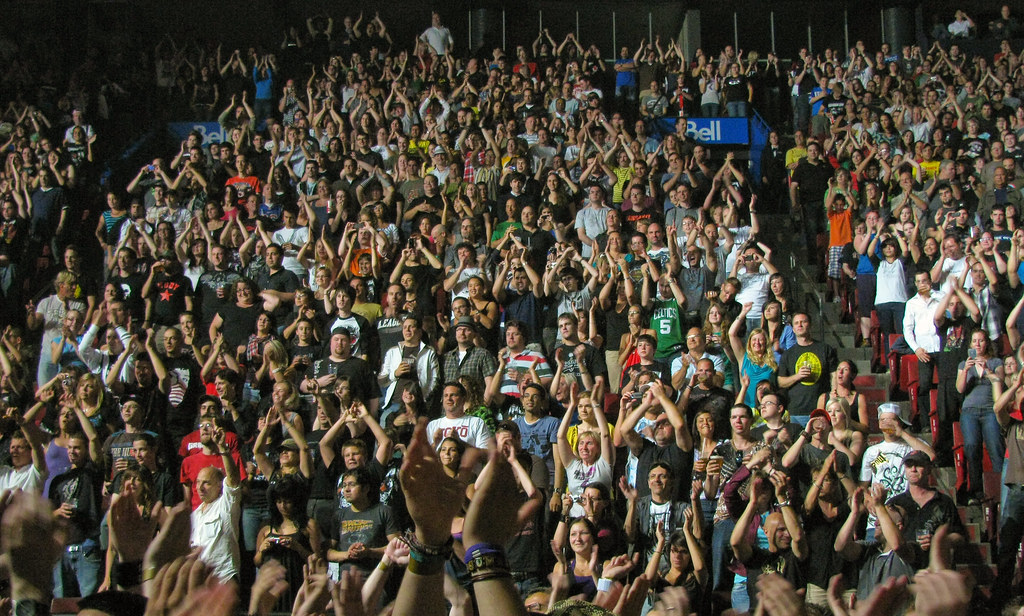

Small venues: intimacy, discovery, and set variation
Small venues win on closeness. You are nearer to the performers, nearer to the crowd, and usually nearer to the moment when a song changes from “something I know” into “something I will remember.” The room does less theatrical work, so the artist has to do more. That is often a good trade.
This format is strongest when you care about discovery. At a smaller festival or a compact venue night, you are more likely to catch an artist you did not plan for, stay for an unexpected set, and leave with a short list of names you now pretend you knew all along. That is one of the cleaner pleasures in live music: being corrected by the schedule.
Small rooms also tend to reward detail. You notice the shape of a vocal line, the way a drummer leans into a transition, or how a band stretches a song because the room will let them. The set can feel less fixed and more responsive. Even when the playlist is the same as last night, the performance often is not.
Pros of small venues
- Closer connection to performers. You can read expressions, cues, and crowd energy more easily.
- Better discovery potential. Smaller bills often make it easier to take chances on unfamiliar acts.
- More variation night to night. Artists sometimes take more liberties in a room that feels personal.
- Less spectacle tax. You are paying attention to music first, not screens, towers, and pyrotechnic diplomacy.
Cons of small venues
- Less production scale. Lighting, staging, and visual effects are usually restrained.
- Room limitations matter more. If the layout is awkward, you feel it immediately.
- Capacity can be tight. A “small” venue can become a practical lesson in elbow management.
- Lineup breadth is narrower. You may get depth on one or two acts rather than a huge menu.
For many listeners, the real attraction is not that small venues are objectively superior. It is that they are easier to inhabit. You do not have to work as hard to feel present. That makes them a strong default if your goal is to listen carefully, discover new artists, and leave with a clearer sense of the music rather than the logistics.
Big stages: production value, lineup breadth, and shared scale
Big stage festivals are built for range. They usually give you more name recognition, more simultaneous options, and more of the kind of production that makes people take out their phones in unison, which is its own modern form of applause. If small venues are about proximity, big stages are about scale.
The most obvious advantage is production value. Bigger systems can support more elaborate lighting, stronger visuals, and a larger sonic footprint. That does not automatically make the music better, but it does change the experience. A set can feel more ceremonial. The crowd is not just hearing a band; it is participating in a shared event with a clearer sense of occasion.
Big stages also help if you want a broader lineup. The scheduling logic is different: you can often move from one major act to another without having to rebuild your entire day around a single room. If you like the idea of choosing between several known artists, or if you prefer the festival to function as a buffet rather than a tasting menu, the larger format has an obvious appeal.
Pros of big stages
- Higher production value. Bigger lighting rigs, screens, and stage design create a more dramatic show.
- Broader lineup. There is usually more choice across genres, stages, and time slots.
- Shared atmosphere. Large crowds can create a strong sense of collective energy.
- More predictable planning. The event often feels more structured around headline moments.
Cons of big stages
- Less intimacy. You are farther from the artist, the small choices, and the micro-drama of performance.
- More waiting and walking. Scale usually brings queue time, transit time, and a fair amount of terrain.
- Higher crowd pressure. Popular sets can become a study in shared compression.
- Less room for surprise. The event can feel more programmed and less improvisational.
Big stages are usually the better fit when you care more about spectacle than discovery. That is not a flaw. It is simply a different job. You are not there to get a new artist gently recommended by the room. You are there to see a large event behave like a large event. A very reasonable ambition.
Trade-offs: sound, crowd density, and travel time
This is where the comparison becomes less romantic and more useful. The right choice depends less on abstract preference and more on which trade-off annoys you least.
| Criteria | Small venues | Big stages | What to watch |
|---|---|---|---|
| Sound | Often direct and detailed, but highly dependent on the room. | More powerful systems, but distance and size can soften nuance. | Do you value clarity, impact, or both? |
| Crowd density | Less mass, but less space to move if the room fills up. | More total space, but heavier pressure near headline sets. | How much personal space do you actually want? |
| Travel time | Often embedded in towns or smaller districts, which can reduce logistics. | Often requires more parking, shuttling, or long on-site movement. | Do you want the event itself, or the event plus a commute? |
| Discovery | More likely to reward curiosity and accidental finds. | More likely to reward advance planning and a target list. | Are you scouting or executing a plan? |
Sound deserves special attention. A small venue can be glorious because the sound reaches you with less distance to travel. It can also be unforgiving if the room is awkward or overloaded. A big stage can deliver a cleaner, more forceful system, but scale can dilute detail. If you want a practical reminder that this matters beyond taste, the CDC’s noise guidance, ASHA’s hearing-loss overview, and the NIH’s noise-induced hearing loss guide all point in the same direction: loud environments deserve a plan, not just enthusiasm.
Crowd density is the other obvious friction point. Small venues can feel intimate until they feel crowded. Big stages can feel spacious until you arrive at the exact point where everyone else had the same idea. The lesson is not that one format is safer or easier in all conditions. It is that scale changes where the pressure shows up.
Travel time is the hidden cost people underestimate. Smaller events are often easier to fit into an evening, while larger festivals can ask for a full day, a longer commute, more waiting, and more energy management. If your ideal outing is low-friction and short, a small venue may fit better. If you want a whole-day immersion, the bigger format earns its footprint.
How to choose based on your goals
The cleanest way to decide is to name the outcome you want before you name the event. That sounds obvious, which is why it is often skipped.
| Your goal | Better fit | Reason |
|---|---|---|
| Discover new artists | Small venues | Less hierarchy in the room, more room for surprise, and more chance to wander into a set you did not plan. |
| See big-name acts with maximum production | Big stages | Larger systems, bigger staging, and more of the “this is the show” feeling. |
| Avoid crowd fatigue | Usually small venues, if capacity is managed well | You may trade mass crowds for a smaller room, though not always for more comfort. |
| Turn the festival into a full-day ritual | Big stages | More stages, more overlap, and more reasons to build a schedule around the event. |
| Keep logistics simple | Usually small venues | Shorter trips and less sprawling movement often make the night easier to manage. |
A reasonable default is this: choose small venues when you want music to feel personal and exploratory; choose big stages when you want the event to feel broad, theatrical, and unmistakably public. If you prefer discovery over spectacle, the smaller format usually wins. If you prefer spectacle over uncertainty, the larger one usually does.
The better question is not “Which is objectively best?” It is “Which form of friction do I tolerate more easily?” Some people would rather navigate a crowded but energetic megafestival than a cramped club with limited sightlines. Others would rather skip the fireworks and stand close enough to see a set change happen in real time. Both are defensible. Only one will fit your temper that weekend.
Questions to ask before committing
Before you buy a ticket or agree to go, ask yourself these questions. They are less glamorous than a lineup poster, but they save regret later.
- What am I actually trying to get from this event? Discovery, a favorite headliner, a social day out, or something quieter?
- How much do I care about being close to the performers? If closeness matters, the smaller room is usually the safer bet.
- Do I want a lineup I can browse, or one I can deeply follow? Breadth and depth are different purchases.
- How much crowd pressure am I willing to tolerate? Be honest here. Festivals are not character-building exercises unless you insist.
- How much travel and waiting am I willing to absorb? A great lineup can still become a mediocre day if the logistics grind you down.
- Will I remember the music, or mostly the movement between stages? That answer is often the real one.
If you want a more structured planning pass, the festival planning checklist can help you weigh dates, travel, and timing before you commit. If your problem is choosing what to see once you arrive, the lineup guide is the better tool. Use the right instrument for the decision at hand. That habit prevents most self-inflicted festival disappointment.
How to mix both types throughout the year
You do not need to pick a side for life. In fact, that would be a poor use of the calendar. The strongest live-music routine usually mixes both formats.
A practical pattern looks like this:
- Use small venues for scouting. Treat them as low-risk opportunities to discover artists, new scenes, and unexpected set variations.
- Use big stages for anchor events. Reserve them for the one or two weekends when you want scale, production, and a broad social atmosphere.
- Alternate the emotional load. After a crowded major festival, a smaller room can reset your attention. After a handful of intimate shows, a larger stage can feel refreshing instead of exhausting.
- Build around one question per season. One season can be for discovery, another for headline moments, and another for simply staying in practice as a listener.
This mix works because it treats festival-going as a portfolio, not a referendum. Small venues give you texture. Big stages give you scale. If you only buy one kind of experience, you risk flattening your sense of what live music can do. Variety is not a luxury here; it is the point.
If you want to keep exploring related guides, start with the blog index and work outward from there, or go back to the home page if you want the broader site navigation first. Either way, the same rule applies: choose the format that matches your goal, then let the festival do its job.
What each format trains you to notice
There is one more useful distinction, and it is easy to miss because it does not show up on a ticket page. Small venues and big stages train your attention differently. A small room teaches you to notice small changes: a better vocal take, a stretch in the bridge, the moment the drummer locks in with the bass player, or the way a crowd leans forward when the set gets good. The room makes nuance visible.
Big stages train a different muscle. They teach you to notice scale, pacing, and collective reaction. You start paying attention to how a headliner enters, how the lighting changes the meaning of a chorus, and how a very large audience can turn a single gesture into a shared signal. The room makes momentum visible. That is useful if you enjoy the social architecture of a festival as much as the music itself.
This matters because memory follows attention. If you care about the parts of live music that happen in the margins, a small venue will give you more to remember. If you care about the sweep of the day, the headline moment, and the sense that everyone around you saw the same thing at the same time, a big stage will usually win. Neither is a trivial outcome. They just reward different kinds of listening.
It also explains why people can be perfectly satisfied in both settings and still prefer one over the other. They are not being inconsistent. They are reacting to different mental rewards. One format gives them texture. The other gives them scale. A good calendar uses both on purpose instead of accidentally defaulting to whichever ticket happens to be easiest to buy.
If you are choosing with a group, this distinction can save arguments before they begin. The person who wants to talk about the song structure is usually going to be happier in the smaller room. The person who wants the full event, the full crowd, and the full production will usually lean toward the bigger stage. Naming that split early keeps the decision honest, which is the least glamorous kind of helpful and therefore the most durable.
Bottom line
Small venues are usually better for intimacy, discovery, and set variation. Big stages are usually better for production value, lineup breadth, and spectacle. The right choice depends on whether you are optimizing for closeness or scale, curiosity or certainty, ease or occasion.
There is no universal winner. There is only the better fit for a given night, budget, crowd tolerance, and attention span. That is the honest answer, and usually the useful one. Decide what you want the day to do for you, then pick the room that can actually do it.