A live performance video can tell the truth, flatter the truth, or blur it just enough to confuse you. The useful question is not whether a clip feels exciting in the first ten seconds. It is whether the sound, the energy, and the surrounding context actually support what you think you are hearing and seeing.
Most viewers arrive with a familiar cluster of questions. Are the vocals really that strong, or is the mix doing heavy lifting? Does the crowd reaction reflect the room, or just the microphone placement? Is this performance impressive on its own terms, or only in comparison with a polished studio version? Those are good questions, because they move you past hype and into observation.
For broader planning context, teams can compare guidance from Google Search Central before choosing a workflow.
Context matters here. A phone recording from the back of a venue will not behave like a professionally mixed festival broadcast. A rehearsal-room session will not carry the same crowd energy as a late-night club set. A one-song clip can also hide what a full setlist would explain. The available evidence in any live video is partial, so the goal is not perfect certainty. The goal is a fair reading.
That is what this guide is for. By the end, you should have a practical way to evaluate sound quality, performance energy, song placement, arrangement changes, and the small caption details that often explain more than the thumbnail ever will. If you want more performance-focused watching after this, keep Guieiro TV and the blog archive nearby.
Start With Terms: What Sound Quality Usually Means
Before judging a performance, it helps to define a few terms in plain language. People often say a clip sounds “good” or “bad” when they really mean something more specific.
Related implementation details are also covered in WordPress documentation, which helps keep tool decisions grounded in established practices.
| Term | Practical meaning | What to listen for |
|---|---|---|
| Vocal clarity | How easy it is to hear the lead voice and understand phrasing | Words stay intelligible without the singer sounding buried or painfully sharp |
| Mix balance | How instruments, vocals, and crowd noise sit against each other | No single element masks everything else unless that is clearly a creative choice |
| Clarity | How cleanly individual parts come through | Kick, snare, bass, guitar, keys, and voice remain distinguishable |
| Distortion | Unwanted breakup caused by overloaded microphones, speakers, or recording gear | Crunching or crackling on loud moments that does not sound intentional |
| Room ambience | The natural sound of the venue around the performance | Reverb and crowd sound add space without washing everything out |
| Dynamics | The difference between quieter and louder moments | The song breathes instead of sitting at one flat intensity the whole time |
These distinctions matter because different problems call for different conclusions. If vocals are slightly rough but still clear, that may say more about performance stamina than about poor musicianship. If the whole clip collapses into distortion every time the drummer hits a chorus, that is often a recording problem before it is a band problem. Good evaluation starts by separating performance from capture quality.
Sound Quality Basics: Listen Beyond “It Sounds Live”
There is a temptation to excuse every messy detail by saying, well, it is live. That shortcut is not very helpful. Live performance naturally includes bleed, room tone, and a bit more unpredictability than a studio track, but it still leaves plenty to evaluate.
Start with the vocals. Ask whether the singer sounds present in the mix. Present does not mean polished. It means the voice occupies a stable place in the sound field and does not disappear whenever the arrangement gets busy. If consonants vanish, sustained notes smear, or every high line arrives with harsh clipping, the clip may be telling you more about the recording chain than the singer. Even so, the result still affects how convincing the video feels to a viewer.
Then check the mix. In a strong live video, the instruments feel like a group rather than a traffic jam. The drums should give shape without swallowing the rest of the band. Bass should support movement without turning the low end muddy. Guitars and keys should add color without masking the lead melody. A useful test is simple: can you describe what each core part is doing during the chorus? If not, the mix may be too crowded to judge fairly.
Clarity is the third piece. This is where headphones often help. Listen to the start and end of notes, not just the volume of notes. Are the drum hits defined, or do they blur into a wash? Does the rhythm guitar sit in a clear lane, or does it dissolve into a broad midrange fog? Can you hear audience singing without losing the band entirely? These are small clues, but they tell you whether a performance video preserves musical detail or mainly delivers atmosphere.
A quick example helps. Imagine two clips of the same song. In the first, the singer is slightly breathy on the verse, but the words are clear, the band stays locked, and the chorus opens up with obvious dynamic lift. In the second, the singer sounds technically louder, yet the recording crackles, the cymbals smear, and the bass turns into a steady blur. Many people call the second clip “more powerful” because it feels louder. A closer listen usually says otherwise.
If you like keeping repeatable comparison notes for several performances, a simple web app generator can be a useful neutral reference for organizing a scoring sheet. The method matters more than the tool. The useful takeaway is to compare the same criteria each time rather than relying on a vague first impression.
Performance Energy: Watch the Room, Not Just the Front Person
Sound is only half the reading. A live video also carries evidence about energy, and energy is more than movement. It includes timing, tension, confidence, crowd exchange, and how well the performers inhabit the shape of the song.
Stage presence is the most obvious part, but it is not the same as constant motion. Some performers project energy through physical movement: pacing, dancing, leaning into transitions, or driving the crowd through call-and-response. Others project it through stillness and control. A singer standing mostly in place can still hold a room if phrasing, eye line, and timing feel deliberate. The better question is not “Are they moving enough?” It is “Does their presence reinforce the song?”
Crowd response also deserves a closer read. Cheers can be genuine evidence of connection, but they can also be exaggerated by microphone placement or editing. Listen for when the crowd enters the sound picture. Does the audience react after clear musical cues such as a beat drop, a note held longer than expected, or a familiar chorus? That usually signals earned engagement. If the crowd sounds huge in every cut no matter what is happening on stage, you may be hearing the production style more than the room itself.
Look for interaction patterns too. Strong live energy often shows up in how a band recovers from small imperfections, how players cue each other, or how the performer adjusts pacing after sensing the room. A guitarist stepping forward for a solo while the singer gives space, a drummer tightening the groove after a loose entrance, or a crowd clap settling into the tempo instead of fighting it: these details often matter more than a dramatic jump shot.
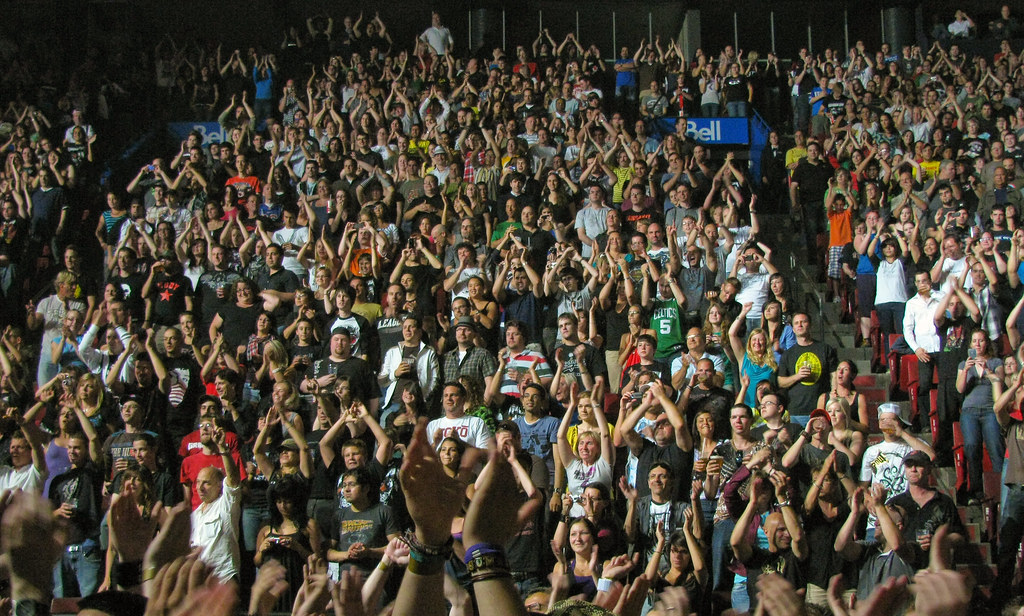
A grounded way to evaluate energy is to watch one verse, one chorus, and one transition. Does the verse hold attention without drifting? Does the chorus expand naturally, with visible commitment from both performers and audience? Does the transition into the next section feel purposeful? Energy is easiest to trust when it changes with the structure of the song.
Set Context: One Song Means More When You Know Where It Sits
One common mistake is treating every live clip as a standalone object. Sometimes that works. Often it does not. Song order shapes how a performance lands, and a video becomes easier to interpret when you know whether the song opens the set, resets the mood, or closes the night.
An opening track usually carries a different job from a midpoint song. Openers often establish tempo, sound, and confidence. Mid-set songs may deepen mood, give the audience space to listen more closely, or keep momentum without exhausting the room. Closers often aim for release, recognition, or a final emotional lift. When you know where a clip belongs in that arc, you can judge it more fairly.
For example, a slower song early in a set may feel underpowered if you expect a crowd-igniting anthem. Place that same song after three louder numbers, and it may work as a deliberate reset that sharpens attention. Likewise, a rougher vocal late in a set may reflect fatigue, but it can also show the cost of an intentionally demanding sequence. Neither reading excuses weak execution. It simply gives you better context for what you are hearing.
If a video description includes a partial setlist, festival slot, venue, or event name, use that information. It helps you ask better questions. Was this a headline set or a short afternoon slot? Was the artist playing to their own audience or to a mixed festival crowd? Was the clip recorded at a release show where the audience already knew the new material? These details change the frame.
Set context turns isolated moments into readable choices. Without it, you risk punishing a slow-burn song for not behaving like a closer or praising a loud clip for momentum that the rest of the set may never sustain.
Compare Versions: Studio Precision vs. Live Interpretation
Comparing a live performance to the studio recording is not about catching the artist failing to reproduce the record. In many cases, a good live version should not match the studio version exactly. The point is to notice what changes and whether those changes serve the song.
| Element | Studio version often does | Live version can reveal |
|---|---|---|
| Tempo | Stays tightly controlled | May push forward for urgency or relax for groove |
| Vocals | Layered, corrected, and polished | Shows stamina, phrasing choices, and emotional emphasis |
| Arrangement | Built for detail and repeat listening | Can strip back sections or add weight for the room |
| Dynamics | Managed through production | Depend on performance discipline and audience response |
| Audience sound | Absent or simulated | Adds friction, scale, and evidence of connection |
A useful comparison method is to pick one section, often the chorus, and ask four questions. Is the tempo similar? Is the melody delivered in the same register or with a different phrasing choice? Has the arrangement been simplified or expanded? Does the emotional center of the section feel the same? Sometimes a live version loses polish but gains urgency. Sometimes it exposes how much of the studio impact came from layering rather than performance. Both findings are useful.
This is also where expectations need discipline. A studio track might rely on stacked harmonies, edited transitions, or carefully shaped low end that no four-piece band could reproduce literally on stage. That does not make the live version weaker by default. It just means you should compare intention with intention, not finished master with raw venue capture.
Use Live Videos To Discover New Artists, Not Just Confirm Favorites
Live performance videos are also a discovery tool. They tell you different things from press photos, polished singles, or short promotional clips. A good live video can reveal whether an artist has shape, control, and a point of view when the environment is less forgiving.
When watching an unfamiliar act, pay attention to repeatable strengths rather than one spectacular moment. Maybe the singer phrases clearly even when the room is noisy. Maybe the rhythm section stays precise through a tempo shift. Maybe the band understands pacing and lets the song build instead of crowding every second. These are promising signs because they tend to survive beyond one upload.
It also helps to compare more than one clip when possible. One acoustic session and one full-band stage performance will usually tell you more together than either can alone. If both versions carry conviction, the artist likely has a stable core. If one works and the other collapses, that is still useful information. It may show where the artist is strongest right now, or what kind of room best suits the material.
The practical takeaway is simple: do not use live videos only to prove that an artist you already like is still good. Use them to find musicians who can hold attention when the environment offers fewer hiding places. That is often where new favorites appear.
Captions and Credits: The Small Text Often Explains the Big Picture
Captions and credits are easy to skip, but they often answer the questions viewers argue about later. When and where was the clip recorded? Was the audio taken from a board feed, a room microphone, or a camera track? Is this part of a live session series, a festival stream, a rehearsal recording, or a fan capture? Those details change how much technical polish you should expect.
Look for practical notes such as venue name, event title, recording date, camera operator, audio engineer, or session series. A credit for separate live audio mixing suggests more post-production attention than a single-camera room capture. A note that the clip comes from a showcase or afternoon festival slot helps explain crowd size and set length. Even simple labels like “acoustic session” or “rehearsal take” can reset your expectations in the right direction.
Credits also help you identify patterns. If several strong videos come from the same session producer, channel, venue, or engineer, you have learned something about the source as well as the artist. That can make your next evaluation faster and fairer.
A Practical Three-Pass Method
If you want one repeatable method, use three passes.
- First pass: overall impression. Watch once without pausing. Note your instinctive reaction, but do not stop there.
- Second pass: sound and structure. Listen for vocals, balance, clarity, dynamics, and how the energy changes between sections.
- Third pass: context and credits. Read the caption, note the venue or event, compare with the studio version if relevant, and decide what the clip can fairly prove.
This method is not glamorous, but it works. It keeps you from making big claims from small evidence, and it helps you explain why a performance lands rather than just saying that it does.
Conclusion: Judge the Evidence, Not the Hype
The most useful way to evaluate a live performance video is to treat it as evidence with limits. Sound quality tells you how well the performance survived the recording chain. Energy tells you whether the performers and the room are actually connecting. Context tells you what the clip is doing inside the larger set, event, or release moment. Credits tell you how the footage was shaped before it reached you.
Once you start reading videos that way, the viewing experience gets richer. You hear more. You notice more. You also become harder to impress for flimsy reasons, which is usually a healthy development. The useful takeaway is straightforward: good evaluation is less about instant verdicts and more about careful comparison. Keep a few stable criteria, revisit strong clips, and use that method to find the performances that genuinely hold up.